HackHub Ultimate Hacker Simulator HackHub Bug Bounty Career Pack
Hunt scoped web flaws on HackerNone, prove them with Borp, and file graded reports for payouts.
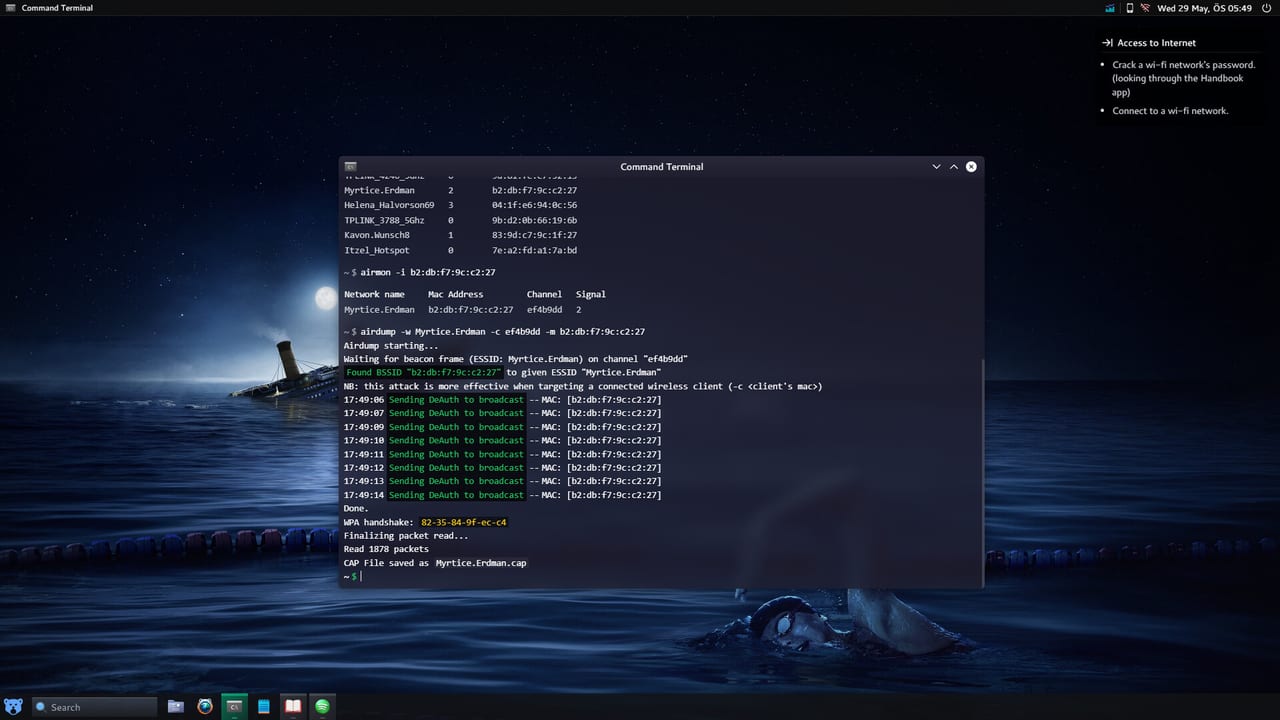
Hackhub: Bug Bounty is the paid career expansion that launched with HackHub 2.0 on October 30, 2026 (Steam DLC alongside the free 2.0 base update). HotBunny’s Steam announcement and DLC store page describe a coordinated-disclosure fantasy: you register on HackerNone, receive program scopes and payout tables, proxy the browser through Borp, prove real simulated weakness classes, and submit structured reports for cash and reputation. This guide teaches the process — scopes, tooling, report quality, and story beats — without inventing fixed IPs or one-click flags that do not exist in your save.
Base-game terminal tools still matter. Treat Bug Bounty as a second career path beside contracts, Hack the Hub, and Online World play documented in Multiplayer.
What the pack includes
According to the official Steam news post and DLC listing:
| Feature | Detail |
|---|---|
| Platform | HackerNone coordinated-disclosure hub |
| Proxy | Borp intercepting proxy with Repeater and Collaborator-style out-of-band proof |
| CLI tools | amass, ffuf, arjun, gitleaks, jwt-tool, waybackurls, apktool, plus a passive asset monitor |
| Weakness classes | 24 simulated classes including IDOR, JWT bypass, SSRF, path traversal, stored/blind XSS, SSTI, subdomain takeover, race conditions, Host-header issues, secrets in source, and business-logic flaws |
| Hand-built targets | 10 companies from tutorial Sprocket Supply and mobile Fitric APK work to strict Meridian Bank |
| Procedural layer | Ongoing programs with simulated web apps, APIs, and rival hunters |
| Story | Six-chapter case about hunter dup3_king duplicating your reports |
| Meta | Reputation and Signal stats, paid triage, timed live events, black-hat broker offers, in-game handbooks |
Payouts depend on severity and how well you write the report. Reputation unlocks harder programmes; report quality keeps triage reading you.
Getting started on HackerNone
- Own and install the Bug Bounty DLC (verify Steam DLC downloads — 2.0.22 fixed macOS DLC install and Store Download behaviour).
- From the 2.0 menu, enter your preferred singleplayer mode or Online World session with DLC content enabled.
- Open HackerNone from the desktop/browser shortcuts the pack adds.
- Read each programme’s scope, policy, payout table, and how heavily the target has already been hunted.
- Accept a programme only after noting in-scope hosts, out-of-scope rules, and disclosure expectations.
Nothing highlights the flaw for you. The programme page is a map of allowed surfaces, not a walkthrough.
Borp proxy workflow
Borp installs as a separate desktop application. Typical loop:
- Launch Borp and point Chromo (or your OS browser) through the local proxy.
- Browse the in-scope application so every request lands in Borp history.
- Intercept and rewrite requests live when testing access control or parameter pollution.
- Resend mutated requests via Repeater to confirm reproducible behaviour.
- Use Collaborator-style out-of-band channels when proving blind SSRF, XSS, or callback sinks.
When you file a report, Borp’s log is the evidence spine: drag ordered steps into the reproduction builder and mark which requests prove impact. Patch 2.0.22 clarified why a request is not treated as an action, kept “Update and resubmit” visible, stopped Ninety Days from ticking its own first step, and stopped valid reports from closing as Informative incorrectly.
CLI recon toolkit
Use the eight terminal tools as scope-aware recon — not spray-and-pray against out-of-scope assets:
- amass — map attack surface and related hostnames inside scope.
- ffuf — fuzz directories, parameters, and virtual hosts carefully.
- arjun — discover hidden parameters before IDOR or mass-assignment tests.
- gitleaks — hunt committed secrets in exposed repos or archives.
- jwt-tool — inspect and abuse JWT validation mistakes.
- waybackurls — recover historical endpoints that still respond.
- apktool — decompile mobile targets such as Fitric-style APKs.
- Passive asset monitor — watch for newly exposed in-scope hosts without noisy scans.
Combine with base-game habits from Nmap, Commands, and Getting Started when a bounty target also exposes classic services. Prefer passive and authenticated in-scope testing before aggressive fuzzing that burns Signal or trips programme rate limits.
Weakness classes and proof standards
The pack implements twenty-four real simulated classes. Operator checklist:
- Confirm the asset is in scope and the class is listed as payable.
- Reproduce with the minimum steps Borp can replay.
- Show impact (data access, account takeover chain, SSRF reachability) without destroying the lab.
- Exclude duplicates — dup3_king story content and rival hunters punish slow write-ups.
- Submit severity that matches the programme table; inflated claims get triage pushback.
Common classes called out officially include IDOR / broken access control, JWT signature bypass, SSRF, path traversal, stored and blind XSS, SSTI, subdomain takeover, Host-header injection, leaked secrets, business-logic bugs, and race conditions. Practice one class at a time on tutorial companies before Meridian Bank–tier targets.
Hand-built companies vs procedural programmes
- Hand-written companies (10) teach paced lessons: Sprocket Supply for onboarding, Fitric for APK reverse work, Meridian Bank for strict banking controls.
- Procedural programmes keep arriving with fresh web apps and APIs so the career does not end after the authored set.
- Leaderboards and rival hunters create time pressure similar to Online World heat — file clean reports quickly.
Story campaign: dup3_king
A six-chapter case follows hunter dup3_king, who inexplicably files duplicates of your findings minutes after you submit. Treat chapters as investigation + report-hygiene training: document timestamps, keep Borp evidence immutable, and escalate through HackerNone fiction rather than skipping triage. Story beats sit beside paid programmes; finishing them improves Reputation/Signal context for harder scopes.
Reputation, Signal, triage, and events
- Reputation gates harder programmes.
- Signal reflects hunter quality — noisy, out-of-scope, or poorly written work hurts future invites.
- Paid triage lets you earn by reviewing others when the pack offers those contracts.
- Timed live events rotate bonus payouts; check HackerNone banners after each login.
- Black-hat broker offers tempt faster cash outside coordinated disclosure — weigh story/Online World consequences before accepting.
In-game handbooks cover Borp shortcuts and report templates; search them before inventing your own format.
How Bug Bounty differs from base contracts
| Base HackHub | Bug Bounty DLC |
|---|---|
| Job board / story mail objectives | Programme scopes and payout tables |
| Shells, hashes, Metasploit chains | HTTP request proof and graded write-ups |
| Session-randomized hosts | Scoped companies + procedural web apps |
| GreyMarket loot loops | Reputation/Signal career stats |
You can still use Metasploit or sqlmap when a scoped host exposes those surfaces, but most bounty payouts hinge on Borp evidence and report structure.
Practical first-evening plan
- Install DLC and open HackerNone handbook pages once.
- Accept the tutorial company (Sprocket Supply or equivalent starter).
- Route Chromo through Borp; capture a clean baseline browse.
- Run light in-scope recon with amass/waybackurls before fuzzing.
- Prove one weakness class end-to-end and submit a Borp-backed report.
- Only then open Fitric APK work or bank-tier programmes.
- Keep notes in Notepad — scopes change and procedural targets rotate.
Related wiki pages
- HackHub 2.0 Update — OS rebuild and Online World context for the DLC launch window.
- Getting Started — desktop and terminal habits that transfer to Borp sessions.
- Commands Reference — shared shell utilities still used beside CLI bounty tools.
- How to Play — pacing between story, contracts, and side careers.
- Multiplayer — Online World systems if you hunt while online.
- Updates Hub — patch notes that touch report triage (including 2.0.22).
Bug Bounty rewards careful reading and reproducible proof. Scope first, Borp second, write-up third — that order keeps HackerNone paying instead of closing your queue.
Frequently Asked Questions
Quick answers to common HackHub questions.
When did HackHub Bug Bounty DLC release?
October 30, 2026 alongside the HackHub 2.0 update. It is a paid career pack on Steam.
What is Borp in HackHub Bug Bounty?
Borp is the intercepting proxy desktop app. Route the browser through it, rewrite requests, resend with Repeater, and drag proof steps into graded reports.
How many weakness classes does the DLC include?
Twenty-four simulated classes such as IDOR, JWT bypass, SSRF, path traversal, XSS variants, SSTI, subdomain takeover, and race conditions.
Do I need Bug Bounty to play HackHub 2.0?
No. 2.0 is a free update for owners of the base game. Bug Bounty is optional DLC focused on HackerNone programmes.
Who is dup3_king?
A story hunter who duplicates your reports minutes after submission across a six-chapter case that trains evidence hygiene and triage pressure.
Which CLI tools ship with the pack?
amass, ffuf, arjun, gitleaks, jwt-tool, waybackurls, apktool, and a passive asset monitor, used inside programme scope.